Since March 1, 2022, we’ve been in the liturgical season of Lent, which is the 40-day period leading up to Easter. During this season, people that celebrate it take an inventory of themselves and decide they want to make a change and to give up something or begin to do something that they feel will draw them closer to God. They in essence confess they are falling short and there is something wrong in their lives — something they could do better or something they should not be doing — all in a quest to be closer to God.

I believe honest confession has a way of helping us see ourselves more clearly. Confession frees us from the paranoia of hoping no one finds out or fear of the penalties of falling short. Confession sets us free.

As I have shared with you before, Max Lucado is one of my favorite writers. I love his ability to tell a good story that accentuates a biblical principle. I was reading from his book “In the Grip of Grace,” and I came across a chapter that talked about confession, telling the truth. I would like to share some of those thoughts with you.

“Confession does for the soul what preparing the land does for the field. Before the farmer sows the seeds, he works the acreage, removing the rocks and pulling the stumps. He knows that seed grows better if the land is prepared. Confession is the act of inviting God to walk the acreage of our hearts. “There is a rock of greed over here Father, I can’t budge it. And that tree of guilt near the fence? Its roots are long and deep. And may I show you some dry soil, too crusty for seed?” God’s seed grows better if the soil of the heart is cleared.

And so, the Father and the son walk the field together, digging and pulling, preparing the heart for fruit. Confession invites the Father to work the soil of the soul. Confession seeks pardon from God, not amnesty. Pardon presumes guilt; amnesty, derived from the same Greek word as amnesia, “forgets the alleged offense without imputing guilt. Confession admits wrong and seeks forgiveness; amnesty denies wrong and claims innocence. Many mouth a prayer of forgiveness while in reality claiming amnesty. Consequently, our worship is cold. (why thank God for a grace we don’t need?) and our faith is weak (I’ll handle my mistakes myself, thank you).

We are better at keeping God out than we are at inviting God in. Sunday mornings are full of preparing the body for worship, preparing the hair for worship, preparing the clothes for worship…but preparing the soul? Am I missing the mark when I say that many of us attend church on the run? Many of us spend life on the run.

Grace means you don’t have to run anymore! It’s the truth, grace means its finally safe to turn ourselves in. Peter did! Remember Peter? Flash the sword and deny the Lord Peter? The apostle who boasted one minute and bolted the next? He snoozed when he should have prayed. He denied when he should have defended. He cursed when he should have comforted. He ran when he should have stayed. We remember Peter as the one who turned and fled, but do we remember Peter as the one who returned and confessed? We should.

How did the New Testament writers know of his sin? Who told them of his betrayal? And more importantly, how did they know the details? Who told them of the girl at the gate and the soldiers starting the fire? How did Matthew know it was Peter’s accent that made him a suspect? How did Luke learn of the stare of Jesus? Who told all four writers of the crowing rooster and the flowing tears? The holy spirit? I suppose it could be that each writer learned of the moment by divine inspiration. Or, more likely, each learned of the betrayal by an honest confession. Peter turned himself in. Somewhere in the Jerusalem shadows he quit running, fell to his knees, buried his face in his hands, and gave up. But not only did he give up, he opened up. He went back to the room where Jesus had broken the bread and shared the wine. There he is, standing in the doorway. “Fellows, I’ve got something to get off my chest.” And that’s when they learn of the fire and the girl and the look from Jesus. That’s when they hear of the cursing mouth and the crowing rooster. That’s how they hear the story. He turned himself in. How can I be so sure? Two reasons.First, he couldn’t stay away. When word came that the tomb was empty, who was the first out of the room? Peter. When word came that Jesus was on the shore, who was first out of the boat? Peter. He was on the run again. Only now he is running in the right direction.

Here is a good rule of thumb. Those who keep secrets from God keep their distance from God. Those who are honest with God draw near to God. This is nothing new. If you loan me your car and I wreck it, am I going to look forward to seeing you? No. it’s been that way since the beginning. How did Adam and Eve respond to God after they had sinned? They hid. “Where are you?” God asked, not for his benefit. He knew where they were. The question was spiritual, not geographical. Secrets erect a fence while confession builds a bridge.

Once there were a couple of farmers who couldn’t get along with each other. A wide ravine separated their two farms, but as a sign of their mutual distaste for each other, each constructed a fence on his side of the chasm to keep the other out. In time, however, the daughter of one met the son of the other, and the couple fell in love. Determined not to be kept apart by the folly of their fathers, they tore down the fence and used the wood to build a bridge across the ravine. Confession does that. Confessed sin becomes the bridge over which we can walk back into the presence of God.
There is a second reason I’m confident of Peter’s confession.

He could not stay silent. Only fifty days after denying Christ, Peter is preaching Christ. Peter cursed his Lord at the Passover. He proclaimed his Lord at the feast. This is not the action of a fugitive. What took him from traitor to orator? He let God deal with the secrets of his life. “Confess your sins to each other and pray for each other so that God can heal you.” (James 5:16)

If we confess our sins, he will forgive our sins, because we can trust God to do what is right. HE will cleanse us from all the wrongs we have done. Remember, the fugitive lives in fear, but the penitent lives in peace.

Once you are in the grip of grace, you’re free to be honest. Turn yourself in before things get worse. You’ll be glad you did.”

Max just shared a great illustration of the freedom that comes with confession. It is easy to talk about but can be difficult and scary to do. To do this you will have to trust God more than you trust yourself.

Written by Chaplain Smith and Max Lucado.

—————————————————————————–

Chaplain Shelby Smith served at a local church for 19 years before joining Arkansas Heart Hospital. Here, he has the opportunity to meet the spiritual needs of patients, their families and our staff. In addition to offering prayer and encouragement, Chaplain Shelby Smith shares a weekly devotional.
Read more of Chaplain Smith’s devotionals.

I am one of those strange people who love new beginnings. I love the thrill and excitement of a new challenge or new experience, and at my age, those don’t come along as often as they used to.

There seems to be an adrenaline rush when I conquer something new, learn a new skill or decide to experience something from a different vantage point. But, just as much as I enjoy new beginnings, others do all they can to avoid them.

For some, the thought of leaving the comfort zone of the known is terrifying. This mindset causes them to forgo many of the new growth opportunities that come their way. They often ask, “If I leave what I know for something new, what happens if it doesn’t work out and I have to start over again?”

Now, I did not always look forward to new adventures. For a period of about 15 years, I did all I could do to avoid change. The thought of giving up the safety of the known seemed to paralyze me. Then after some years of serving as a pastor, my thinking began to change.

After conducting a lot of funerals, I had the unique experience of examining up close the way many people had lived their lives. When talking to the families of the deceased, almost all of them would say that this person always wished they had done this or that. To which I would ask, “Why didn’t they do that?” More than half of the time, the response was, “Well, they just waited too late.” What a sad epitaph. Wouldn’t it be interesting to walk through the cemetery and look down at a tombstone and see the epitaph: “Here lies a guy that waited too late.”

One of these days it will be my time to leave this earth, and when I do I want my epitaph to be, “He used all he had and squeezed so much living out of his life that we barely had enough of him left to bury.” You see, I finally decided that if I had to start over…great. At least I will have better information this time than I did the first time around.

Fear of failure often keeps us from new beginnings. We need only look around to find people who are stuck in an open grave. I call it that because if you have been to a cemetery, you know that often they are beautifully landscaped with beautiful trees and lush lawns all around. But none of the people there can enjoy it because it’s too late. It’s a wonderful place, but the enjoyment of it is now out of reach for those who reside there.

Some of us are that way with life. We have beautiful things and opportunities all around us, but we don’t get to, or we won’t take advantage of them because we are stuck in the failures and fears of the past. Oh, we can see the opportunities, but we don’t take advantage of them because we are stuck in our open graves.

What new beginning are you putting off because of past failures? What is it that you want to do but don’t have the courage to try again? Maybe rather than a new year’s resolution, you should have a new year’s revolution! Maybe it’s not just changing what you do but changing the way you think as well.

You need what one pastor referred to as “The Expulsive Power of a New Affection.” You need something greater as an anchor for your focus. Maybe personal gain is not a strong enough rope to pull you along as the going gets tough. Why don’t you consider a spiritual component as a part of your new year’s revolution?

Have you considered the claims of Jesus? He made some pretty audacious claims. He said, “That I am the Bread of Life.” He is more than bread to satisfy our physical hunger, Jesus offers himself as the “Bread of Life” to fulfill deeper longings and an eternal need.

Jesus says He is the “Light of the World.” A relationship with Him provides the light we need to move forward. Jesus says I am the “True Vine.” If we abide in Him, we will be productive. Without him we can do nothing.

The scriptures go on to tell us that as believers, to set our minds on things above. We should be heavenly minded. We should be known for love, not slander — forgiveness and restoration, not for condemnation. We should be that person that people come to for understanding and truth.

We are always caring, fair-minded and compassionate about the things of life. A heavenly mindset will encourage us to try again and not be afraid.

Now back to this revolution, this new thinking. The idea is I have something that I am so committed to, so enthralled with, so filled with that I don’t even want to look at other things. It is the “expulsive power” that throws out all these other things. It is a new affection…it is Jesus. When I love Jesus with all my heart and all my soul and all my mind, it will change the way I look at everything in life.

Here is what I’m saying: Put Jesus first in every part of life — the thoughts you think, the friends you choose, the way you spend your time, the goals you set, and the resolutions you make. It will transform you. So, make every year, every month, every week, every day and every hour, count.

This year may God give to each of us the “expulsive power of a new affection” and a renewed love for Him.

Remember Proverbs 16: “Commit to the Lord whatever you do, and your plans will succeed.”

Written by Chaplain Smith and Greg Laurie

——————————————————————————-

Chaplain Shelby Smith served at a local church for 19 years before joining Arkansas Heart Hospital. Here, he has the opportunity to meet the spiritual needs of patients, their families and our staff. In addition to offering prayer and encouragement, Chaplain Shelby Smith shares a weekly devotional.
Read more of Chaplain Smith’s devotionals.

Arkansas Heart Hospital’s Little Rock facility has been included in the list of ‘Best hospitals for patient experience in the South’ published by Becker’s Hospital Review. With 54 hospitals on the list, Arkansas Heart Hospital was one of only three in the state to be included.

“We are honored to receive this distinction and to be included among some of the region’s leading hospital systems,” said Dr. Bruce Murphy, CEO of Arkansas Heart Hospital. “To receive this endorsement is a testament to the work of every member of our team – from physicians and nurses to our environmental services department and more. We are all committed to providing the highest level of care and service to our patients, their families and visitors.”

Becker’s compiled the list based on the Hospital Consumer Assessment of Healthcare Providers and Systems (HCAHPS) scores from the Centers for Medicare and Medicaid Services (CMS). HCAHPS is a national, standardized survey of hospital patients’ experiences during a recent inpatient hospital stay. All of the hospitals included received a five-star patient rating. The figures represent data released on Jan. 26, based on data from July 1, 2020, to March 31, 2021.

Becker’s Hospital Review, one of the leading healthcare publications in the U.S., previously included Arkansas Heart Hospital in its lists of ‘Top-rated hospitals for patient experience,’ published in January 2022, and ‘The nation’s top 22 patient-recommended hospitals,‘ published in February 2020.

About Arkansas Heart Hospital
Arkansas Heart Hospital is a nationally recognized, award-winning hospital dedicated to preventing, diagnosing and treating cardiovascular and related diseases, with a focus on bariatrics, endocrinology and peripheral artery disease. Named one of the World’s Best Specialized Hospitals, Arkansas Heart Hospital offers advanced technology and the latest in health care services by a team of leading physicians, including cardiologists; bariatric, cardiovascular, general and vascular surgeons; primary care physicians and more. It currently operates two hospitals and 24 community clinics in Arkansas and Texas. For more information, visit arheart.com.

Carb-dense foods may not be part of the bariatric diet, but that doesn’t mean bariatric patients have to kiss Italian food goodbye. Our dietitians are ready with tasty, nutritious alternatives that will set bariatric patients up for success.

The Bariatric & Metabolic Institute at Arkansas Heart Hospital (BMI) is happy to provide a lifetime of support including nutritional counseling and recipes like this low-carb lasagna using zucchini.

Low-carb Zucchini Lasagna

Ingredients:

  • 20 ounces zucchini (Note 1)
  • 1 pound ground beef (Note 2)
  • 1 (15-ounce) can tomato sauce (Note 3)
  • 1 cup finely chopped onion (Note 4)
  • 1.5 cups shredded mozzarella cheese (Note 5)
  • 2 cup finely grated parmesan cheese (Note 6)
  • 1 tablespoon dried oregano
  • 1.5 teaspoons table salt
  • 1/4 teaspoon ground cayenne (Note 7)

Instructions:

  1. Brown Beef: Add ground beef to high-sided pan (Note 8) over medium-high heat. Crumbling beef with stiff utensil, cook until browned and released water has evaporated for 7 to 8 minutes. Optionally, drain off grease in pan, especially if using less than 90% lean beef.
  2. Make Tomato Sauce: Add onions to pan with ground beef over medium-high heat. Cook until onions are softened and translucent, stirring occasionally, for a few minutes. Reduce to medium heat and stir in tomato sauce. Simmer until sauce is thick and clings to meat and onions (important for liquid control; Note 9), stirring frequently for about 10 minutes. Stir in oregano, salt and cayenne until well mixed, about 1 minute. Turn heat off.
  3. Prep Oven & Cut Zucchini: Position oven rack in lower half of oven and preheat to 375 degrees. For each zucchini, slice off and discard both ends. Stand zucchini vertically on a stable flat end, and carefully slice into 1/8- to 1/4-inch-thick strips along the length (Note 10).
  4. Assemble Lasagna: Arrange one-third of zucchini slices along bottom of 8×8 inch baking dish, slightly overlapping each other. Evenly spread half of meat sauce over zucchini slices. Distribute 1/2 cup of mozzarella over meat sauce. Repeat with another zucchini layer, meat sauce layer, and mozzarella layer. Top with remaining zucchini slices. Add another 1/2 cup mozzarella and 1/2 cup parmesan over zucchini slices. Give the baking dish a quick shake so that cheeses spread out and settle into cracks. (See Note 11 for make-ahead option.)
  5. Bake & Serve: Bake uncovered at 375 degrees until lasagna is golden brown on top, about 45 minutes (Note 12). Cool for 15 minutes to allow lasagna to set and cease bubbling before slicing. Serve (Note 13) and store any leftovers (Note 14).

Nutrition:

Makes 4 Servings (Notes 15-16)

Amount Per Serving (1.5 cups):

  • Calories 470 (48% from fat)
  • Total Fat 25g (39%)
  • Saturated Fat 12g (62%)
  • Cholesterol 128mg (43%)
  • Sodium 1260mg (52%)
  • Net Carb 8.5g
  • Total Carb 12.5g (4%)
  • Dietary Fiber 4g (16%)
  • Sugars 7.5g
  • Protein 46g
  • Vitamin A 22%
  • Vitamin C 48%
  • Calcium 45%
  • Iron 24%

Notes & Tips:

(1) Zucchini. About 2 large or 3 medium raw zucchinis. Peeling and de-seeding are not necessary. See Note 9 for details on why pre-salting zucchini to draw out moisture is not needed.

(2) Ground Beef. Extra lean ground beef (such as 95%) is ideal for avoiding a greasy casserole. If yours is less than 90% lean, drain off the grease in the pan after browning the meat. Don’t want to use beef? Readers have successfully substituted with ground turkey, Italian sausage, and plant-based protein.

(3) Tomato Sauce. About 1.75 cups. To ensure that the resulting tomato sauce is thick, use tomato sauce or puree, not thinner products like diced or crushed tomatoes. Some pasta or spaghetti sauces will work, but they vary in consistency, so you may need to adjust the sauce’s simmering time.

(4) Onion. About 1 small onion. I use a yellow onion.

(5) Mozzarella Cheese. About 5 ounces weight. I use a pre-shredded bag of low-moisture part-skim cheese, which means the cheese has been dried out for a longer shelf life and better browning ability compared to fresh mozzarella. Readers have successfully substituted with cheddar cheese, Monterey cheese, vegan cheese, ricotta cheese, and cottage cheese.

(6) Parmesan Cheese. About 2 ounces weight. This is the kind of parmesan that has a sandy or almost powdery texture. Not shredded.

(7) Cayenne. This amount doesn’t make the lasagna spicy; it just enhances the other flavors in the lasagna. If you want spicy lasagna, increase the cayenne or add some red pepper flakes.

(8) Pan. The pan should be large enough to hold the beef, tomato sauce, and onions. I use a 10-inch nonstick pan with 3-inch-tall sides. No lid needed. It’s not necessary to pre-heat the pan, and oil is not required since the beef will release grease as it cooks.

(9) Liquid Control/Thick Sauce. Zucchini is a wet vegetable that releases a lot of liquid as it cooks, so a common technique is to salt zucchini slices prior to cooking or grilling them. In this recipe, such methods are skipped in favor of simply simmering until the sauce is extra thick (see photo of thickened sauce). Then the zucchini’s released liquid is absorbed by the thick sauce during baking, avoiding an overly watery lasagna.

(10) Cutting Zucchini. Don’t worry if your slices aren’t perfect — it won’t affect the deliciousness of the lasagna. Use a mandolin if you want perfect zucchini slices. Another option is to use a vegetable peeler or cheese slicer. Once cut, the zucchini slices can be used immediately to assemble the lasagna, and do not need to sit around (see Note 9 on liquid control).

(11) Make Ahead Options. Assemble the lasagna, cover tightly with foil, and refrigerate or freeze (without baking). Before serving, preheat the oven and bake uncovered until the lasagna is golden brown on top, about 50 minutes (from refrigerated) — this is 5 minutes more than what’s listed in the recipe, since it’s chilled. Another option is to assemble and fully bake the lasagna, then cover and refrigerate. When you’re ready to serve, reheat in the oven until warmed through.

(12) Baking Lasagna. Watch the lasagna carefully after 30 minutes of baking. It can turn quickly from a white surface to a golden-brown surface, and the cheese can easily burn. If the surface is golden brown before the lasagna is fully cooked, cover with foil.

(13) Serving. Serve this zucchini lasagna with low carb appetizers and sides like artichokes with balsamic dip, garlic roasted mushrooms, and creamed spinach.

(14) Leftovers. Cover and store leftover servings in the refrigerator or freezer and reheat using the microwave or oven.

(15) Nutrition. The estimate assumes all the ground beef if consumed, which is not the case if you drained off some of the beef’s grease.

(16) Adjusting Yield. You can double the ingredients proportionally. Use a larger 9×13-inch casserole dish and increase the baking time as needed until the casserole is cooked through and golden brown on top.

To find more bariatric-friendly recipes and weight loss success stories, visit our From the Heart blog. To learn about Bariatric & Metabolic Institute, visit bmi.arheart.com.

Meet Lisa, a patient at the Bariatric and Metabolic Institute (BMI) at Arkansas Heart Hospital, who underwent gastric sleeve surgery with Dr. Samuel Bledsoe.

A Defining Moment

In October 2020, my mom suddenly passed away due to diabetes. That caused me to take a good look at myself, and at that moment, I knew my life needed to change so I didn’t leave my children without a momma, too.

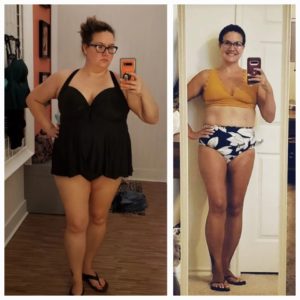
I was 5’3”, weighing 306 pounds, wearing a 3X shirt and a 22/24 jeans. I was hurt, depressed, embarrassed, ashamed, and always hiding from cameras. I literally couldn’t get out of the shower and dry off without being completely out of breath and feeling like I just ran a marathon.

The Phone Call

I had an appointment for some lab work and the doctors let me know I was very close to full blown diabetes. So, I immediately picked up the phone and called the Bariatric & Metabolic Institute.

In May 2021, I got the call from Heather, a coordinator at BMI, saying I was approved, and my life would be changed! She set me up an appointment a month later with Dr. Bledsoe.

I went in having knowledge of all the procedures and he let me know the safest option for me was the gastric sleeve. Never once did I feel scared, unsafe or unsure. I finally felt that I would be able to take my life back!

I met with Courtney, one of the dietitians, and she gave me so many helpful tips that I was ready to get back home and start my new healthy lifestyle.

Living Proof

You can truly tell each doctor, nurse, dietitian and coordinator at BMI has your best interest in mind and truly cares about their patients. I highly recommend BMI to everyone. I am living proof that your life can be changed.

Ninety days out of surgery, I was 106 pounds down with more energy than I’ve ever had in my life.

Now, I’m going to the gym. The person who couldn’t dry off for five minutes without heavy breathing and feeling like they would pass out is exercising one hour a day!

If you’re on the fence, have the surgery for yourself and your family. Take your life back one pound at a time.”

If you’re interested in learning more about bariatric surgery, visit bmi.arheart.com. Read more inspirational patient stories and find BMI-friendly recipes.

“Completely miserable” is how Jill described herself a few years ago. At 250 pounds, she had both hips replaced in her 30s due to severe osteoarthritis, and obesity-related diseases like high cholesterol and blood pressure.

“I almost started my journey in 2018, but I left the idea of surgery alone,” she said. “I was too nervous. I cared too much about what people would say or think. The next year a friend had bariatric surgery and honestly that gave me the courage to go all in!”

After learning about the Bariatric and Metabolic Institute (BMI) at Arkansas Heart Hospital, Jill gained the confidence to pursue surgery. And in December 2019, Dr. J.D. Fuller performed Jill’s vertical sleeve gastrectomy.

“I have lost 100 pounds and have maintained it for just over two years now,” she said. “He literally saved my life and gave me my life back – a life I never realized I was even missing out on.”

THE EXPERIENCE

Jill found BMI doctors and staff to be “exceptional in every way.”

“The BMI experience was amazing,” she said. “The facility was awesome. The staff – from housekeeping to food service to the nurses – were all awesome and so encouraging. They were really motivating at a time when I needed it. Dr. Fuller and his team are seriously top notch!”

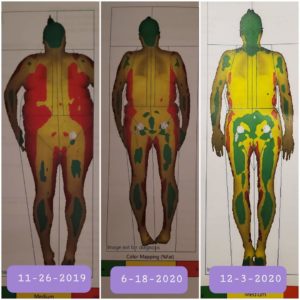
A DXA scan shows Jill’s body fat decreasing steadily throughout her weight loss journey.

TODAY

“I can move again,” she said. “I can reach my toes in a sitting position. I can sit ‘crisscross applesauce.’”

It’s in the everyday moments Jill feels most thankful for this new life. She can keep up with her four kids and even participate in races.

“I completed two different 5k run/walk events in 2021,” she said. “Never in a million years was this something that was even remotely on my radar.”

She’s also gained confidence to wear clothes that she wants.

“I feel so confident in how I look,” she said. “I went from a size 22/24 and 3X top, to size 6/8 and medium tops,” she said. “I feel incredibly proud of my progress, and I love sharing my story with one who wants to hear it.”

Learn more about our safe and effective bariatric surgery options and watch our free online seminar to help you start your journey to healthy and long-lasting weight loss.

For years Victor was suffering from high cholesterol, high blood pressure and type 2 diabetes. He knew he had to get off his medications for good, but traditional weight loss options were not successful.

MAKING THE DECISION

At a weight of 442 pounds, Victor was suffering from high cholesterol, high blood pressure and type 2 diabetes. He tried for years to lose weight to improve his health and get off his medications but was unsuccessful.

“I had tried several weight loss programs and was not able to maintain the weight loss, so I was looking for a more long-term solution with the hope of reversing my cholesterol, high blood pressure and diabetes,” he said.

After researching his medical history, he learned about weight loss surgery options and eventually, the Bariatric and Metabolic Institute (BMI) at Arkansas Heart Hospital. In December 2021, Dr. J.D. Fuller, bariatric and general surgeon, performed Victor’s sleeve gastrectomy.

“Dr. Fuller was very professional with a great bedside manner,” he said. “He explained everything in layman’s terms so that I could understand.”

Victor says his experience was pleasurable from start to finish, and he would recommend the Bariatric & Metabolic Institute to anyone considering weight loss surgery.

“Everything about the experience was great,” he said. “From the beginning of the process and all the way through. The entire BMI staff has been wonderful.”

A DREAM BECOMES REALITY

Victor conquered his goals after surgery and has achieved non-scale victories he didn’t think were possible.

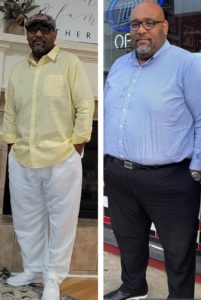
“I have since been able to discontinue the cholesterol and diabetes medicines and I’m working on the blood pressure,” he said. “I feel better, sleep better and am not in much pain these days. I get right out of bed and start walking, and I can cross my legs, walk longer distances, sleep without snoring and sleep longer.”

If you’re interested in learning more about bariatric surgery, visit bmi.arheart.com. Read more weight loss surgery success stories and register for a free online seminar.

2022 Big Game Menu

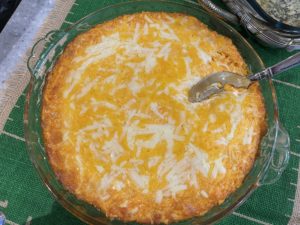
Buffalo chicken dip
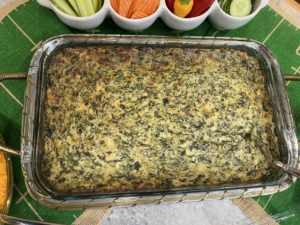
Spinach and artichoke spread with low-carb tortilla crisps and veggies
Sausage balls
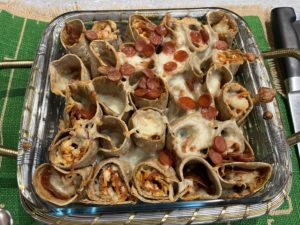
Pull apart pizza

Above, watch our Bariatric and Metabolic Institute (BMI) dietitians cook our bariatric-friendly, low-carb Big Game 2022 menu from the kitchen, and find a shopping list, ingredients, instructions and nutrition information below.

Shopping list:

Produce:
Celery
Green bell pepper (optional)
White onion (optional)
Baby carrots
English cucumber
Mini sweet bell peppers
1 bunch green onions

Proteins:
1 rotisserie chicken
1 pound Jimmy Dean or William’s breakfast sausage
Pepperoni/mini pepperoni (optional)
1 pound Italian sausage (optional)

Baking/spices:
Garlic powder
Nonstick cooking spray
Kosher salt
Black peppers
Almond flour
Baking powder

Dairy:
8 oz shredded cheddar cheese
16 oz shredded mozzarella
8 oz shredded Monterey jack
3 8 oz packages Neufchatel
Blue cheese crumbles
8 oz small curd cottage cheese

Condiments:
Frank’s Hot Sauce
Duke’s Mayo
Cara Mia Artichoke Bruschetta
Rao’s Pizza Sauce

Miscellaneous:
2 packages La Banderita Carb Counter Street Taco Tortillas
Flatout Light Italian Herb Flatbread

Frozen:
1 12 oz packages chopped spinach

Buffalo chicken dip*

Ingredients:

8 oz Neufchatel cream cheese, softened
¾ cup Louisiana-style hot sauce (Frank’s used in our recipe)
½ cup Duke’s mayonnaise
2 cups chopped cooked chicken breast
8 oz shredded Monterey Jack cheese
1 bunch green onions, both green and white parts, chopped
1/3 cup blue cheese crumbles

Directions:

  1. Preheat oven to 375 degrees.
  2. Spray 9×13 inch baking dish with nonstick cooking spray.
  3. In a large bowl, mix the cream cheese with the hot sauce and mayonnaise until combined.
  4. Stir in chicken, 1 ½ cups of the cheese and ¼ cup green onion.
  5. Pour mixture into a standard 9-inch pie pan and sprinkle the remaining ½ cup of cheese on top.
    Bake the dip for 20 minutes, or until cheese is melted and dip is bubbling around the edges.
  6. Remove from oven and garnish with blue cheese crumbles.
  7. Let cool for 10 minutes, then garnish with remaining green onions.

Estimated Nutrition Info per serving (1/3 cup): 225 calories; 17 grams fat; 2 grams carbohydrate; 13 grams protein
*Recipe adapted from dukesmayo.com

Spinach and artichoke spread with seasoned low-carb tortilla crisps and assorted veggies

Ingredients:

2-12 oz packages frozen chopped spinach, cooked according and well drained
1 jar Cara Mia Artichoke Bruschetta
½ cup small curd cottage cheese
½ cup Duke’s mayo
8 oz Neufchatel cheese, softened
2 teaspoons garlic powder
1 ½ cups shredded low moisture part skim Mozzarella cheese
2 packages La Banderita Carb Counter Street Taco Size Tortillas, cut into eighths
Nonstick cooking spray
Basic seasoning blend (equal parts kosher salt, garlic powder and freshly ground black pepper)

Directions:

  1. Preheat oven to 355 degrees.
  2. Spray 9×13 inch pan with nonstick cooking spray.
  3. In a blender, combine cottage cheese, mayo, and Neufchatel. Pulse until smooth.
  4. Add garlic powder and pulse again until blended.
  5. In a large bowl mix the cooked spinach, the jar of Artichoke Bruschetta and the mayo/cheese mixture. Toss to combine. Stir in shredded mozzarella cheese.
  6. Pour into prepared baking dish, bake 30 minutes or until bubbling.

Estimated Nutrition Info (¼ cup serving): 134 calories; 11 grams fat; 4 grams carbohydrate; 2 grams fiber (2 net carbs); 4 grams protein

Tortilla crisps:

Directions:

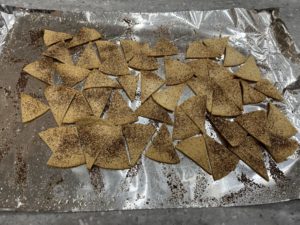
  1. Preheat convection oven or air fryer to 350 degrees
  2. Line a large baking sheet with foil/parchment paper. Spray with nonstick cooking spray.
  3. Evenly distribute tortilla sections on tray and spray with nonstick spray.
  4. Season with basic blend, flip again, spray with nonstick spray and season other side.
  5. Bake 15 minutes, remove from oven and cool on parchment paper.

Estimated Nutrition Info (8 crisps): 20 calories; 0.g grams fat; 5 grams carbohydrate; 5 grams fiber (0 net carbs); 2 grams protein

Sausage balls*

Ingredients:

1 ½ cups shredded cheddar cheese
1 pound breakfast sausage (Jimmy Dean & William’s used for recipe)
1 cup almond flour
1 Tablespoon baking powder
4 oz Neufchatel cheese, softened

Directions:

  1. Preheat oven to 375 degrees.
  2. Line a baking sheet with aluminum foil, spray generously with nonstick cooking spray.
  3. Mix all ingredients by hand in a bowl until well combined.
  4. Using a 1 ½ ounce scoop make about 24 equal portions. Even out by hand, space evenly on baking sheet.
  5. Bake 25 minutes.
  6. Allow to cool slightly before removing from pan.

Estimated Nutrition Information per sausage ball: 107 calories; 8 grams fat; 1.5 grams carbohydrate; 0.5 grams fiber (1 net carb); 6 grams protein

*Makes about 24.

Pull apart pizza

Ingredients:

1 package Flat Out Light Italian Flat Bread
1 jar Rao’s pizza sauce
2 cups shredded mozzarella cheese
Assorted toppings (pepperoni, mini pepperoni, cooked Italian sausage, diced green bell pepper, diced onion, etc.)

Directions:

  1. Preheat oven to 350 degrees.
  2. Spray 9×9 inch baking dish with nonstick cooking spray.
  3. Sprinkle wide end of wrap with 2 Tablespoons mozzarella, additional toppings, 2 tablespoons of sauce and 2 more tablespoons of cheese.
  4. Roll tightly and place seam side down on cutting board. Continue with 6 more flatbreads.
  5. Cut each flatbread into four equal size rolls. Place cut side down in baking dish. Sprinkle with more cheese and sauce.
  6. Bake 15-20 minutes or until bubbly.
  7. Serve with additional pizza sauce if desired.

Estimated Nutrition Into for 2 pieces (varies depending on toppings* used): 90 calories; 5 grams fat; 12 grams carb; 6.5 grams fiber (5.5 net carbs); 7 grams protein

*Flatbread, cheese, pizza sauce used in calculation.

Visit our From the Heart Blog for more bariatric-friendly, low-carb recipes, weight loss success stories and our BMI services.

We are pleased to welcome our new Interventional Cardiologist Dr. Armaghan Soomro, MD, to the Arkansas Heart Hospital family.

Dr. Soomro joined the Interventional Cardiology team after completing his clinical fellowship at UAMS. He earned his medical degree from Dow Medical College where he graduated with special honors. He completed his post-graduate training in Internal Medicine and Clinical Cardiology from Northwell Health/Hofstra School of Medicine-Staten Island.

In addition to patient care, Dr. Soomro shares a keen interest in clinical research and completed a Clinical Research Certificate Program (CRTP) from Drexel University. He has been published in multiple peer-reviewed medical journals and national conferences as well.

He is board certified in Internal Medicine, Adult Echocardiography, Nuclear Cardiology and Vascular Ultrasound.

Changing people’s lives is his motivation as an interventional cardiologist.

“The most rewarding thing in this profession is seeing the impact you have on people,” he said. “It’s very gratifying to know that someone who came in at one of the lowest points, is now moving on to live a thriving, viable life back with their family and friends.”

Dr. Soomro’s approach to patient care is simple but significant.

“I feel it’s really important for a patient to feel that his physician and doctor is someone they can trust, and someone who can guide them through the lowest points of their illness to bring them back to becoming a more viable and healthier person…”

Dr. Soomro strives to be a champion for his patients through every step of their journey.

“I would like patients to feel…that I am an advocate for them, a colleague and someone who is there for them in their journey of healthcare,” he said.

Though only living in Arkansas for a short time, Arkansans have found a place in his heart.

“Working in Arkansas has personally been very gratifying,” he said. “I think the best part about that is the people. I think they’re some of the most sincere people that I’ve come across. It’s gratifying to help these people out in their time of need.”

Outside of work, Dr. Soomro loves spending time with his wife and four-year-old daughter, as well as traveling, exercising and spending time outdoors.

Arkansas Heart Hospital is proud to launch the state’s first post-COVID pulmonary rehabilitation program. The comprehensive outpatient treatment, offered through Strong Hearts Rehabilitation Center, will serve qualifying individuals experiencing symptoms for at least four weeks. It will be one of five medical facilities in the U.S. to offer services the special rehabilitation services.

Strong Hearts Rehabilitation Center Director, Amanda Xaysuda, oversees the program. She explains that the program’s goal is to help patients get back to their normal activities.

“We see patients that come in and they just want to get back to the quality of life that they had before that diagnosis,” she said. “We’re gradually working on getting them back into their routine, working on their specific symptoms, their goals that they have for life and their functional movements and capacity – this is really the goal of what we’re trying to do.”

Post COVID Symptoms

According to studies, half of those infected by COVID-19 experience lingering health conditions, such as:

  • Continued coughing
  • Difficulty breathing
  • Difficulty exercising
  • Heart palpations
  • Chest pains
  • Joint pain
  • Memory or concentration problems
  • Sleeping problems
  • Muscle pain or headache
  • Loss of smell or taste
  • Depression or anxiety
  • Dizziness when you stand

Making A Life-Changing Difference

“For many Arkansans, the negative effects of COVID-19 extend well beyond the initial infection phase,” said Dr. Bruce Murphy, CEO of AHH. “This unprecedented outpatient program will help those still impacted by the virus return to and enjoy everyday life.”

Xaysuda said the program may be challenging but will really make life-changing difference for those suffering with post-COVID symptoms, such as inability to exercise.

“A lot of the research that has come out recently about exercise intolerance in these types of patients is it’s not something that is easily done, but it’s not something these patients have to live with for the rest of their life,” she said.

Arkansas Heart Hospital will offer the post-COVID pulmonary rehab program at its flagship Little Rock campus, Encore Medical Center in Saline County and community clinics in Conway and Russellville.

Pulmonary Rehab Services

Qualifying patients will undergo a full health assessment prior to receiving services, then visit their designated clinics for three days per week for 12 weeks. Patients will receive myriad services from AHH’s in-house team to help mitigate and control their symptoms, such as monitored one-on-one or group exercise regimens, breathing re-trainings and more. AHH will also refer individuals for additional specialty services, as needed.

Medicare and select private health insurance companies will cover the services for qualifying individuals. Those interested in scheduling an appointment may call 501-978-3780 or email stronghearts@arheart.com.

Arkansas Heart Hospital was recently named one of the World’s Best Specialized Hospitals by Newsweek, for the fourth consecutive year.  It operates two hospitals and community clinics across the state.

In the News: