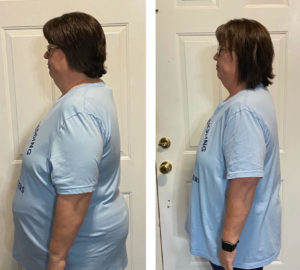
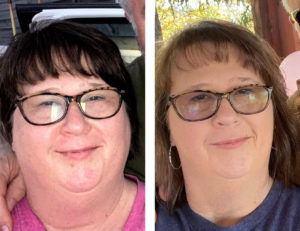
“If you understand how something works, it becomes knowledge you own,” says Lynette Flynn, clinical educator at Arkansas Heart Hospital. With years of experience running a critical care unit, revamping our educational programs as well as training some of our top leadership and physicians, it’s evident Lynette knows what she’s talking about.  

Arkansas Heart Hospital (AHH) values education and professional development as powerful tools to keep us on the forefront of ever-changing medical technologies. That’s why we put some of our most experienced and knowledgeable minds at the helm of our education programs. One being Lynnette Flynn.  

“Healthcare is very dynamic with new research, medications, equipment and discoveries being made almost daily,” Flynn said. “As care providers in a cutting-edge facility, clinicians have to stay on top of it all. Education helps accomplish that. AHH provides a clear bright light that is focused on education as a core tool to ensure the excellent patient-focused care provided in our facilities is maintained and supported.” 

Flynn, along with quality trainer Jayne Lookadoo-Harrison and clinical trainer Robin Scott, have built and managed unique educational programs that promote the AHH team as leaders in cardiac care innovation, nurture our future healthcare leaders and sustain our culture of mentorship.  

Our keystone programs include: 

Patient Care Partner Residency Program 

Helping individuals who want to begin a career in the medical field, the PCP Residency Program requires no previous educational or work experience. Over several weeks, participants receive in-depth classroom instruction, led by seasoned team members. They also obtain invaluable bedside experience in our facilities. 

Participants complete regular clinical shifts under the guidance of our hospital’s registered nurses and current patient care partners, so they are equipped to perform a variety of complex duties from day one on the job. 

New Graduate Nurse Program 

Our 14-week new grad nursing program is designed to support the newly hired graduate and assist with transitioning to a competent professional. The residency program introduces the new graduate nurse to our patient-care model and is an overlay to orientation. 

This program walks them through from new grad novice level to competent critical care clinicians and provides a firm foundation to support their continued skill development,” Flynn said.  

Certification Courses  

Clinical career development is supported by providing expert level courses and study groups to guide team members through successful attainment of national certification exams, including the CCRN, RCIS, CNOR and CHFN. These certifications are followed with a monetary reward, which is the best in our region, through the duration that team members maintain their certification. 

At the heart of our education and professional development initiatives is a simple goal, Flynn explains.  

“My goal for our education program is to be a place of inquiry — a place where everyone feels safe to ask questions and explore the answers,” she said. “It’s a program that meets the basic knowledge needs of novice learners as well as stimulates the expert learners to seek deeper understanding.”  

Further your career as a member of the Arkansas Heart Hospital family. View opportunities and benefits at:  arheart.com/careers 

Posted in All

Amber underwent weight loss surgery to prevent health conditions and become a healthy role model for her children. After losing more than 160 pounds, she’s loving her new life. Read her story.

I have struggled with my weight since I was 20. I reached 300 pounds around my 23rd birthday and kept gaining weight after that. I had borderline high blood pressure and was on the verge of having polycystic ovary syndrome (PCOS).

I sought bariatric surgery because of my inability to be able to adhere to diets or make them work for me. I wanted to be able to be a healthy role model for my daughter and participate in physical activities with her.

I had a friend that went through the program at the Bariatric & Metabolic Institute months before me, and she referred me to the program.

Arkansas Heart Hospital helped me through the process and was great from the get-go. I did talk with some people from another hospital, but they did not help in any way to get the pre-surgery requirements or let me meet the surgeon prior to having everything done.

I underwent gastric sleeve surgery with Dr. JJ Tucker, bariatric and general surgeon, in August 2021. Dr. Tucker and the BMI team are great! Recovery was easy for me; I had zero issues. I was able to go back to work in three days.

I’ve lost more than 160 pounds and I have regular menstrual cycles and do not have PCOS or borderline high blood pressure.

My family compliments me every time they see me. I can cross my legs — I haven’t been able to do that in 15 years. I walk five miles without needing to rest. I have energy and can go without issues. I just want to live life to the fullest. I can ride every ride at Magic Springs and can ride them comfortably, which is amazing. I have a new life!

I would tell others who are considering bariatric surgery to just do it. Don’t wait. It’s 100 percent worth it.

Our nationally recognized team of surgeons, dietitians, nurses and therapists are here to guide you to a longer, happier life with the help of bariatric surgery. Go to bmi.arheart.com to see if you qualify for surgery, learn about your surgical options and watch our free online on-demand seminar.

There are many misconceptions about bariatric surgery due to a lack of information and understanding. With the help of our Bariatric & Metabolic Institute at Arkansas Heart Hospital team, we have addressed three common weight loss surgery misconceptions and explained why there are incorrect.

With diet and exercise, surgery is unnecessary

For some suffering with obesity and chronic health conditions, a healthy diet and exercise may not be enough to help them achieve long-lasting weight loss and reverse life-threatening conditions. This does not mean they are lazy or lack willpower. It means their body will not allow them to overcome the genetic, biological, metabolic, behavioral, social, economic and cultural factors stacked against them.

“Many in society, including even some in the healthcare profession, have the misconception that when someone struggles with their weight it’s because they eat poorly and are inactive,” said Courtney Sutterfield, bariatric dietitian. “Some of this is from reality shows that showcase obesity as food addiction. Some patients have a much slower metabolism and are very efficient at storing carbs as fat. It is also a genetic disease.”

At the Bariatric & Metabolic Institute, gastric bypass surgery and gastric sleeve surgery are a options for those who have tried and failed to lose weight through traditional ways. However, these may not be beneficial for everyone. That is why our patients must meet certain medical guidelines and undergo a screening process to qualify for surgery.

Surgery is extremely dangerous

While bariatric surgery – just like all surgeries – has risks, it is not as dangerous as some may think. Laparoscopic, minimally invasive techniques have reduced bariatric surgery risks significantly.

“The procedure has progressed to the point that bariatric surgery is incredibly safe,” Dr. Samuel Bledsoe, bariatric and general surgeon, said. “The mortality rate for bariatric surgery ranges from .05 to .5 percent. That makes bariatric surgery as safe as gall bladder surgery.”

According to Dr. Bledsoe, living with weight-related diseases such as type 2 diabetes, high blood pressure, sleep apnea, high cholesterol and hypertension, is more dangerous and deadly than bariatric surgery.

“Staying where you are is also risky,” Bledsoe said. “In fact, it’s riskier to be morbidly obese with diabetes and high blood pressure than it is to have bariatric surgery.”

In fact, surgery can reverse these comorbidities and even cure type 2 diabetes.

“If you’re taking insulin or other medications to treat diabetes when you come into the hospital for surgery, more than likely you will be off those medications when you leave,” Dr. J.D. Fuller, bariatric surgeon, said. “We see other benefits as well; cholesterol gets better, high blood pressure gets better, sleep apnea tends to get better, mobility gets better, energy levels improve, and patients are able to exercise and get back to work and feel like they’re living life again.”

Surgery is the easy way out

Bariatric surgery, or weight loss surgery, is not a quick fix – it’s just one piece of the weight loss journey. Undergoing a major procedure that changes the way your body handles food is certainly not the easy way out.

“I think one of the most common stigmas associated with bariatric surgery is that it is an easy fix. That is false,” said Stephanie Thrash, BMI clinic coordinator. “Bariatric surgery takes commitment and is a total lifestyle change. It takes hard work and dedication.”

To experience lasting weight loss success, bariatric surgery patients must maintain a healthy diet and exercise for the rest of their lives. It’s also necessary for some patients to maintain relationships with a dietitian, therapist, exercise physiologist and surgeon.

The Bariatric & Metabolic Institute makes the weight loss journey easier with access to an army of medical professionals for the rest of a patient’s life.

“We offer a more personalized education approach because we want to make sure each one of our patients succeed long term,” said Shanna Porterfield, dietitian. “We do not just herd people through the program, we make sure patients are ready to tackle the lifestyle change.”

Bariatric surgery is a major decision, and our surgeons are ready to discuss the safest and most effective option for you. Visit bmi.arheart.com to learn if you qualify for bariatric surgery and if it’s covered by your insurance. Also, watch our on-demand, no-commitment informational online seminar.

Your family’s health – past and present – can have a big impact on you. For some, that might be concerning news. However, there’s a silver lining. You can change your health trajectory through knowledge of your family medical history and prevention.

“Discussing your family medical history may not be an easy topic to bring up,” Director of CT and Keep the Beat heart screening program, Melanie Amick, APRN, said. “However, it can serve as a vital tool in disease prevention and managing one’s overall health.”

Take advantage of time spent with family and start conversations about your family medical history. When it comes to your health, there’s no time to waste.

When gathering information, no detail is too small and the more the better. To help you get started, Amick has provided important information you should collect for each family member.

  • Gender and date of birth
  • Every major or minor medical condition or diagnosis and date of diagnosis
  • Age and cause of death for those who passed away
  • Ethnic background
  • History of pregnancy loss or birth defects
  • Allergies
  • Environments, habits or behaviors that are shared

Once you’ve collected information, you can go one step further and use the U.S. Department of Health & Human Services web-based tool, Family Health Portrait. It’s an easy way for you to store, save and share your family history.

Below, Amick provides insight into the benefits of knowing your family’s medical history.

Detect your risk – It’s easier to detect conditions you are at high risk for when you know your family medical history. For example, if your mother’s family has a history of heart disease, your doctor can recommend the right screening or exam to detect the disease as soon as possible.

“Health screening exams can help detect early signs of disease, allowing for early intervention,” Amick said. “Knowledge of the family health history can help both patient and provider determine which tests are most appropriate.”

Diagnose possible conditions – You can be diagnosed with an illness you didn’t know you had. In fact, heart disease is often a silent killer.

“A person can have significant coronary artery disease while asymptomatic,” Amick said. “Symptoms of coronary artery disease are routinely related to everyday life. Sometimes, the first symptom is a fatal heart attack and therefore it is important for everyone to be screened.”

Decrease risk – Not all genetic diseases can be cured, but there are measures you can take to ease symptoms. Your doctor can recommend medications, therapies, or simple lifestyle changes that can decrease the risk of a more aggressive illness. For example, improving your diet and exercise can decrease your risk of having diabetes, heart disease, high blood pressure, high cholesterol, sleep apnea and more.

Defend your family – Knowing your family medical history gives you the option to make smarter healthcare decisions that can help your children and possibly end the cycle of suffering from chronic conditions that can be treated or prevented.

When collecting your family medical history, “offer to make the history available to other family members so they can share the information with their doctors,” Amick said.

Prepare for a visit – When visiting a new physician, you’ll probably have to answer a slew of medical history questions. Being prepared with your family medical history can help relieve the stress of answering them correctly, while also providing the doctor with a clearer picture of your health.

You may also consider our Keep the Beat screening program to further eliminate uncertainty about your health.

Know your risk with Keep the Beat

Our Keep the Beat program is an easy, comprehensive and cost-effective way to help you discover your risk for heart-related conditions.

“The Keep the Beat program has shown success in saving lives while offering an affordable, quality heart screening service to the community,” Amick said. “Patients receive detailed counseling on their individual test results and leave the appointment with a clear understanding of their heart health.”

Patients have found they have peace of mind about their current and future heart health after their screening.

“A patient may leave the appointment with peace of mind, require simple lifestyle modifications, follow up with a primary provider, or a cardiology consult,” Amick said “Educating the patient empowers them to take control of their own health.”

Learn more about Keep the Beat and schedule your appointment or purchase a gift certificate for a loved one.

The expectation of a longer, healthier and happier life after bariatric surgery is exciting for those struggling with excess weight and obesity-related conditions. To make the most of this investment in your life, there are important post-operation recovery steps recommended by the team at the Bariatric & Metabolic Institute at Arkansas Heart Hospital, so, you can start your new lifestyle successfully and minimize potential complications.

Here’s what to expect with weight loss surgery recovery:

Hospital Stay – Both gastric bypass and sleeve gastrectomy operations are laparoscopic procedures, so incisions are small, allowing for a quicker recovery time. After surgery, a 24-hour hospital stay for gastric sleeve surgery and a 48-hour stay for gastric bypass surgery ensures our nursing team can monitor you and provide support.

Time Off – Most patients take around one week off to recover. Though people can go back to doing light work duties, a full recovery can take up to four weeks.

Walk – Walking is one of the most important things to do after surgery to ensure a safe and quick recovery. Most patients should start walking one hour after surgery to prevent blood clots, then every hour for four weeks after discharge.

Hydration – Drinking water is vital. Dehydration is common after surgery as it is hard to catch up if people get behind on fluid intake. Patients should be drinking 64 ounces of calorie-free/caffeine-free fluid every day.

No Lifting – While healing, people should not lift greater than 10 pounds for the first two weeks and then nothing greater than 30 pounds for weeks three and four after surgery. There are no lifting restrictions after four weeks.

Vitamin Regimen – Vitamins will be a normal part of a post-bariatric surgery life. Patients will receive them before discharge and will be expected to take them on a regular basis. Our dietitians will prescribe a personalized vitamin regimen.

Eating Plan – To heal properly, the post-op eating plan should be followed closely. Failure to do so can result in serious complications.

Bariatric surgery is a tool, not a quick fix. The Bariatric & Metabolic Institute team of surgeons, dietitians, psychologists and exercise psychologists make sure that patients have all the resources and encouragement at every phase of their journey for the rest of their life. Recovery is unique to each person, and the patient’s physician and our BMI team will help set expectations and provide support.

If you’re interested in our weight loss surgery options, or have questions about factors such as surgery requirements, insurance coverage, the bariatric surgeons and more, schedule an appointment with the Bariatric & Metabolic Institute today.

Summer is packed with family get-togethers and outdoor activities, so you need quick and easy protein-packed meals to satisfy everyone. We have you covered with these healthy low-carb and bariatric-friendly recipes that take summer favorites to a whole new tasty level.

We encourage you to get in the kitchen and try these healthy summer recipes approved by dietitians at the Bariatric & Metabolic Institute at Arkansas Heart Hospital.

Mexican Chicken Bites

Ingredients:

  • 2 pounds of ground chicken
  • 2 eggs
  • ½ cup cotija cheese, crumbled
  • Mexican seasoning (recipe below)
  • Olive oil

Directions:

  1. Gently break apart the ground chicken into a large bowl.
  2. Add eggs, cheese and Mexican seasoning. Combine gently with hands.
  3. Portion out using a 2-oz. metal scoop.
  4. Heat a sauté pan over medium high heat and add a drizzle of olive oil.
  5. Place chicken in pan, leaving room to flatten it with a spatula.
  6. Allow to cook for three minutes, then flip over and flatten with spatula.
  7. Allow to cook about three minutes more or until chicken is cooked through.

Mexican Seasoning Ingredients:

  • 3 tablespoons chili powder
  • 1 ½ teaspoons cumin
  • 1 tablespoon garlic powder
  • 1 tablespoon onion powder
  • 2 tablespoons oregano
  • 2 tablespoons kosher salt

Directions:

  1. Combine all ingredients in a bowl.
  2. Store in airtight container.

Italian Sliders

Ingredients:

  • 2 packages Lewis Bakery Keto Hawaiian Rolls
  • 1 16-oz package ground Italian sausage (Johnsonville brand preferred)
  • 4 slices mozzarella cheese
  • Low-carb marinara sauce

Directions:

  1. Preheat oven to 350 degrees.
  2. Divide sausage in eight equal pieces, roll into balls and place on foil lined baking sheet.
  3. Bake at 350 degrees for 20-30 minutes or until the meat thermometer registers 160 degrees.
  4. Slice rolls in half and place one piece of cheese on each half. Bake for 350 degrees until toasted and cheese melts (about 10 minutes).
  5. Evenly space meatballs onto half the rolls and spoon marinara sauce over meatballs.
  6. Top with other half of the rolls and bake another 10-15 minutes.

Nutrition per sandwich:

  • Calories: 207
  • Fat: 13 grams
  • Protein: 18 grams
  • Carbs: 13 grams carbs (3 net carbs)
  • Fiber: 10 grams

Chicken BLT Wraps*

Ingredients:

  • Grilled chicken breasts, thinly sliced
  • Mission low-carb tortillas (soft taco size)
  • Boston lettuce
  • Roma tomatoes, chopped
  • Bacon, pre-cooked
  • Smoky mayo (recipe below)

Directions:

  1. Place three leaves of lettuce on a tortilla.
  2. Top with six ounces of chicken breast, tomatoes, one slice of bacon and two tablespoons of smoky mayo.
  3. Roll up and cut in half. To make it easier to cut, roll up the wrap in plastic wrap and refrigerate.
  4. Serve with smoky mayo if desired.

Smoky Mayo ingredients:

  • ½ cup mayo (Duke’s is preferred)
  • ½ cup fat free plain Greek yogurt
  • ½ cup fat free buttermilk
  • ½ teaspoon smoked paprika
  • 1 teaspoon kosher salt
  • Freshly ground black pepper to taste

Mayo directions:

  1. Combine ingredients in a bowl.
  2. Refrigerate for at least two hours.

Nutrition per serving (2 tablespoons):

  • Calories: 42
  • Fat: 4 grams
  • Protein: 1 gram
  • Carbs: 0.5 grams

*The recipe is appropriate for bariatric surgery patients who are on the lifetime/regular bariatric phase.

If you have chicken and lettuce left over, try this Greek lettuce wrap that is perfect for an easy summer meal. Find more recipes for every occasion, healthy eating tips and heart health information.

Last year I decided that it was time for me to get physically fit, so in December I accepted a challenge to participate in our Cardiac Rehab Program’s “Twelve Days of Fitmas.” One of the driving forces for me to get in better shape was that when a “Code Blue” alert was called while in my office in the basement, by the time I would run up the stairs and get to the room, there was almost a need for a second “Code Blue” because I couldn’t breathe.
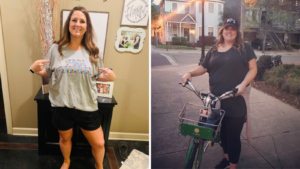

I have learned that even though you may not be overweight, it does not mean you are physically fit. This was clear every time I responded to a “Code Blue.” I have never been one to enjoy exercise and I have for some time had poor eating habits — this combined with being 64 years old was a perfect recipe for poor physical health.

After I finished the 12-day challenge I decided to continue. It was tough and required a lot of discipline to hang in there long enough to make exercising a habit. Our Wellness Coordinator Eric Siebenmorgen has been excellent at motivating me and teaching me to properly execute the exercises in a way that gets the greatest results. I have been able to stick with this for about six months, faithfully attempting to attend the gym at least three days per week. After consulting with Eric, I have also begun to consistently eat healthier.

As fate would have it, for about the last month, illness, vacations, time with grandchildren and home projects have sidelined my workouts. They were all legitimate and important events or tasks, but the net effect is I have allowed them to disrupt my momentum and take me away from the things that are essential to be physically fit. I am amazed that in just 30 days, I have lost so much of what it took me six months of physical discipline to gain. These legitimate events also interrupted my spiritual disciplines also.

If the physical gains are lost in just one month of not being faithful to exercising, just think about what happens to our spiritual fitness when we neglect the disciplines that keep us spiritually healthy. Our spiritual health suffers greatly when the spiritual exercises that equip us for the work God calls us to are abandoned — spiritual exercises like prayer, meditation, reading God’s word and community worship. Whether you read the Bible, the Torah or the Quran, or some other holy book, a regular diet of spiritual wisdom will fuel your soul just as eating healthy foods fuels your physical body.

I believe today more than ever we need to be spiritually fit. As we look at our society and the world we live in, increasingly we are confronted with spiritual darkness, forces of evil. The world wants us to look at each other as if people are the problem. Humanity’s true struggle is not against flesh and blood, but against evil, spiritual forces in the heavens.

Ephesians 6:12 speaks of it this way: “For we do not wrestle against flesh and blood, but against the rulers, against the authorities, against the cosmic powers over this present darkness, against the spiritual forces of evil in the heavenly places.” In short, we are in spiritual warfare.

The devil is happy to let you picture him as a cartoon character in a red jumpsuit with horns, so you won’t take him seriously. Know this, he has a team of demons that know your history, weaknesses and sin patterns. Their goal is to keep you from experiencing God’s will for your life and they are good at what they do.

The only way to win is to fight the spiritual with the spiritual. Your human strength won’t work. The Apostle Paul tells us in Ephesians 6:13, “for this reason put on the whole armor of God so that you may be able to withstand in the evil day and having done all, to stand firm.” Your only hope is to be strengthened by the Lord and to put on the full armor of God.

There are six pieces of armor. The first is Truth. Wear it like a belt around your waist. God’s word is Truth. To wear truth like a belt is to live authentically before God.

The second is Righteousness — wear it like armor on your chest. God’s righteousness, not your own. God imputed Christ’s perfect righteousness to us.
The third is Peace. We need our feet sandaled with the readiness for the gospel of Peace. Roman soldiers wore sandals with cleats built in to help them have firm footing and to stand their ground under attack.

The fourth is Faith; take up the shield of faith to extinguish all the flaming arrows of the evil one. What is faith? It’s acting like God’s telling the truth, being obedient to God’s view on the matter.
The fifth is Salvation — take up the helmet of Salvation. A helmet protects the head, the mind, the control center of the body. Our spiritual standing in Christ must protect our thinking. We are to think God’s thoughts and not operate on human wisdom.

The last piece of armor is the Sword of the Spirit, which is the word of God. This is the only offensive weapon on the list. This Sword is more like a dagger made for close hand to hand combat. Paul is talking about the Word of God spoken, made effective by the Spirit, to cut through the devils lies.
Don’t be afraid about the warfare or the victory. We have read the end of the book, and because of what Jesus did on the cross, we win! He has charged us with occupying the land until He returns.

Written by Chaplain Smith.

—————————————————————————————————————-

Chaplain Shelby Smith served at a local church for 19 years before joining Arkansas Heart Hospital. Here, he has the opportunity to meet the spiritual needs of patients, their families and our staff. In addition to offering prayer and encouragement, Chaplain Shelby Smith shares a weekly devotional.

Read more of Chaplain Smith’s devotionals.

After trying numerous diets that never seemed to work, Heather found the “amazing gift” of a healthier, happier life through surgical weight loss at the Bariatric & Metabolic Institute at Arkansas Heart Hospital. Read her story.

Doing her research

I had diabetes and high blood pressure since the age of 26 and tried every diet under the sun. I originally researched weight loss surgery about 10 years ago at another central Arkansas hospital but was not confident in my decision on surgery at the time.

Once COVID hit, I began researching surgery options again and came upon the new BMI team at the Arkansas Heart Hospital. I selected the Arkansas Heart Hospital for gastric sleeve surgery because of the excellent care and staff.

TAKING HER LIFE BACK

At my initial consultation with Dr. Samuel Bledsoe, bariatric and general surgeon, in July of 2020, I asked him, “why surgery?” As a type 2 diabetic for over 10 years on insulin, he said that I would at least cut 10 years off my life if I did not do something and showed me the scientific evidence to back it up right there in the office.

I went home and did my own research and decided he was right. I appreciated the time and thought Dr. Bledsoe put into visiting with me before beginning the surgery process. Once I decided this was the right fit for me, I met with the dietitians and therapist.

During my psychiatric evaluation, it was discovered that I suffered from Binge Eating Disorder, and I was required to undergo six weeks of therapy treatments prior to being approved by the hospital for surgery. While this was frustrating, it was also a blessing as it prepared me mentally for all aspects of surgery and life after surgery.

The team at the Bariatric & Metabolic Institute at Arkansas Heart Hospital truly has your best interest at heart and wants you to succeed and I appreciated the fact they value that surgery is not a “quick fix” but a tool to help me live my life as healthily as possible.

A POSITIVE EXPERIENCE

In November 2020, I had gastric sleeve surgery done by Dr. Bledsoe. I suffer from extreme medical anxiety, so I was shocked when surgery was over, and the pain was minimal, and recovery was smooth! I spent one night in the hospital and did not have any complications.

As a 38-year-old who never had surgery, let alone an IV before, the whole entire staff treated me with the best care. The night shift crew brought me to tears with how well they cared for me, and I could not imagine having this surgery at any other hospital.

Arkansas Heart Hospital really embraces all aspects of the recovery process. My stay was better than I could have ever imagined. All the staff at the BMI clinic are amazing and truly felt like they wanted to help anyone succeed. The whole experience was positive!

SMOOTH RECOVERY

I was able to take a week off work and felt that this was sufficient time for my body to heal. My body recovered well, and I only had bruising from the port incisions that went away after a few weeks. My son was one at the time and I did have help the first few weeks of surgery in caring for him since I was not able to lift him into his car seat for the first six weeks. I did find that walking around my neighborhood every couple of hours during my recovery helped significantly reduce pains from surgery.

A NEW LIFE

Now over a year and half later, I am down 70 pounds, off all my diabetic medications and insulin, and have no high blood pressure. I feel amazing, walk 3-4 miles a day, and can chase and play with my son! I can get on the floor and play or ride bikes or go for long walks and even jump in bounce houses with him. I chose this surgery so that I can live the healthiest life possible for my family, and I am so proud of how far I have come.

If you are considering bariatric surgery, do your research, but also know it can be an amazing gift! I wish I had done the surgery sooner. However, I do not think mentally I was ready. So, if you are just starting your journey or wanting to begin your journey, take your time and enjoy the process.”

Our nationally recognized team of surgeons, dietitians, nurses and therapists are here to guide you to a longer, happier life with the help of bariatric surgery. Go to bmi.arheart.com to see if you qualify for surgery, learn about your surgical options and watch our commitment-free online seminar.

Father’s Day is a time to fire up the grill and celebrate dad with juicy, flame-kissed meat and flavorful sides. For those on a bariatric or low-carb eating plan, you can still join the party with this dietitian-approved grilled pork tenderloin with firecracker slaw recipe. Grab your apron and tongs and try it out.

PORK TENDERLOIN

Ingredients:

  • 1 whole boneless pork tenderloin
  • Kosher salt
  • Freshly ground black pepper
  • Garlic powder

Directions:

  1. Thirty minutes before grilling, cut tenderloin into 1/2-inch-thick medallions.
  2. Grill on medium high heat for 3-4 minutes per side.

NOTE: You may also toss various non-starchy summer veggies on the grill such as onions, sweet peppers, jalapenos and zucchini. Brush them with a little canola or olive oil, season with kosher salt and freshly ground black pepper, then grill.

FIRECRACKER SLAW

Ingredients:

  • 2 packages of angel hair slaw
  • ½ head purple cabbage, thinly sliced
  • 1 10-ounce package shredded carrots
  • 4 green onions, sliced
  • 2 red bell peppers, thinly sliced (seeds and ribs removed)
  • 2 yellow bell peppers, thinly sliced (seeds and ribs removed)
  • 1 jalapeno, minced (seeds and ribs removed if you want less heat)

Dressing:

Ingredients:

  • ½ cup canola or olive oil
  • ½ cup red wine vinegar
  • ½ cup Splenda
  • 2 tablespoons spicy brown mustard
  • 2 teaspoons kosher salt
  • 2 teaspoons smoked paprika
  • Freshly ground black pepper

Directions:

  1. In a large bowl combine all vegetables; use tongs or toss with clean hands to combine.
  2. In a separate bowl combine dressing ingredients.
  3. Pour dressing over the slaw and toss to combine.
  4. Serve immediately or place in refrigerator.

Time saving tip: A food processor is a great tool to use for shredding veggies. All vegetables may be prepped and combined in large bowl up to one day in advance. Dressing may be made up to two days in advance and refrigerated until ready to use.

BBQ MAYO:

Ingredients:

  • ½ cup low carb barbecue sauce (G Hughes Sweet & Spicy used for recipe testing)
  • ½ cup mayonnaise (Duke’s used for recipe tasting)

Directions:

  1. Combine ingredients in bowl.
  2. Serve alongside pork and slaw.

Find more recipes perfect for the bariatric eating plan on our blog.

If you’re ready to start your journey to a healthier, active lifestyle, our team is here to discuss the best bariatric surgery option for you. Visit bmi.arheart.com to learn more, see if you qualify for surgery and to watch our free, no-commitment online seminar.

Water is essential to maintain bodily functions, but it is not always easy to get enough during our busy days. And let’s be honest – plain water can get boring.

With these refreshing and simple infused recipes, water can be healthy, delicious and fun. All you need are a few ingredients.

Raspberry and Orange

Raspberry and orange = summer in a glass. Grab one thinly sliced orange and one pint of raspberries (thinly crushed) in a pitcher, then add two quarts of water. Refrigerate for two to four hours, stir well and strain to remove the solids. Finish it with a few ice cubes.

Watermelon and Mint

A hot day calls for a watermelon and mint infused water. This quick and easy recipe calls for four cups of ½- inch watermelon cubes and six springs of mint (lightly crushed). Add these to a pitcher with two quarts of water. Refrigerate for two to four hours, stir well, strain to remove the solids and enjoy!

Apple and Cinnamon

If you think you cannot enjoy infused water in the fall, think again. This apple and cinnamon water recipe is a treat for your tastebuds. Place two thinly sliced apples and four cinnamon sticks in a pitcher, then add two quarts of water. Refrigerate for two to four hours, stir well, then strain to remove the solids.

Strawberries and Sugar-Free Lemonade

Who knew lemonade could be healthy? For this summery infused water, grate a few fresh strawberries into a water pitcher. Squirt in a few drops of sugar-free lemonade — Crystal Light or Dasani Drops are good choices. Allow the mixture to sit for two to four hours, then refrigerate.

Tomato, Celery and Bell Pepper

If fruit is not your thing, we suggest this tangy, unique blend of tomato, celery and bell pepper in your water. Place one diced tomato, two chopped celery stalks and one small, diced red bell pepper in a pitcher, then add two quarts of water. Refrigerate the ingredients for two to four hours, then stir well and strain the solids.

Healthy food should be delicious food. Check out our healthy recipes that are ideal for bariatric, low carb eating plans and for those wanting to lose weight and better their health. If you’re looking for surgical weight loss options, visit bmi.arheart.com.